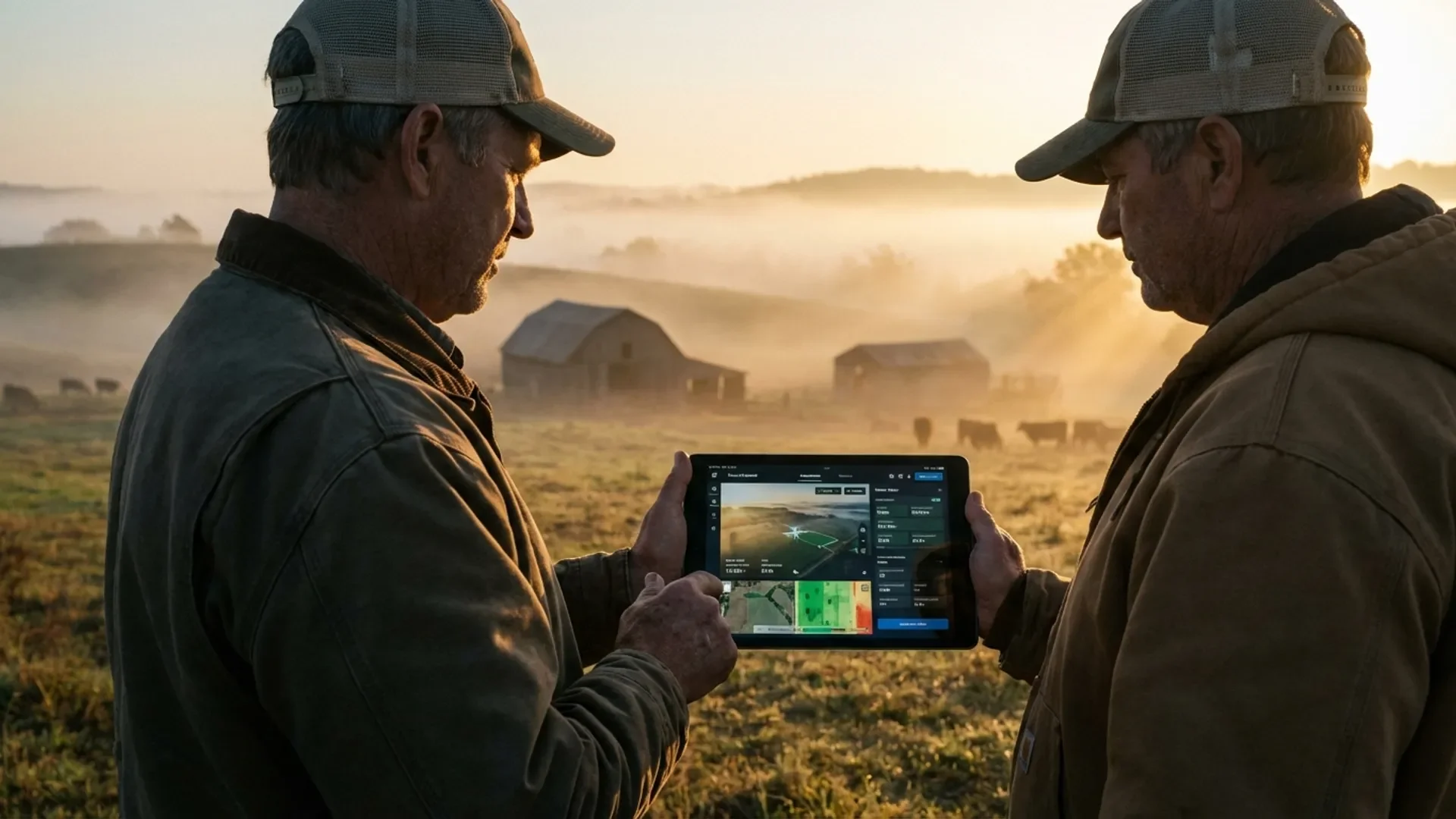
Agriculture deserves the same institutional-grade market infrastructure as every other major asset class. While equities, fixed income, and derivatives operate on centralized exchanges with deterministic matching and transparent price discovery, physical wholesale markets still rely heavily on phone calls, spreadsheets, and fragmented logistics coordination.
Commodity trading began in local markets built on reputation and trust. Grain receipts in Chicago formalized transactions. Futures markets introduced hedging and centralized clearing. Each step made trading faster and more reliable.
But physical spot markets — especially in agriculture — did not evolve at the same pace.
Producers still call multiple buyers to compare prices. Processors manage inconsistent product specifications. Freight is often negotiated after price is agreed. Settlement depends on paperwork and manual confirmation.
These are not technology limitations. They are infrastructure gaps.
Modern exchange infrastructure solves these gaps through:
- Anonymous centralized price discovery
- Structured product attributes and standardized instruments
- Deterministic price-time matching
- Delivered-price visibility
- Structured post-trade workflows
- Milestone-based settlement
The same principles that govern financial exchanges can govern physical wholesale markets.
URMRKT was built to bring that infrastructure to agriculture first — and wholesale markets broadly over time. We are not digitizing phone calls. We are implementing exchange-grade architecture for physical goods.
The next evolution of commodity trading is not about replacing relationships. It is about strengthening them with transparent pricing, verified specifications, and structured execution.
Wholesale markets deserve institutional infrastructure. That shift has already begun.
Written by
Robert Alberghine